
Vivimos en una era extraña. Tenemos toda la información del mundo en la palma de la mano, pero nunca ha sido tan difícil acceder a lo que realmente importa. Hoy quiero hablarles de algo que me ha estado dando vueltas en la cabeza: el caso de la Filmoteca Maldita, y cómo esa lucha por el cine se conecta con lo que intento construir aquí en Oaxaca, desde el código de mi sitio web hasta las proyecciones en las calles de Atzompa.
We live in a strange era. We have all the world's information at our fingertips, yet access to what truly matters has never been harder. Today I want to talk about something that has been on my mind: the case of La Filmoteca Maldita, and how that fight for cinema connects to what I'm trying to build here in Oaxaca — from the code behind this website to screenings in the streets of Atzompa.
El caso del "Feo": Cuando rescatar el pasado es un crimen / "El Feo's" Case: When Rescuing the Past Is a Crime
Para quienes no conocen la historia, hace poco el mundo de la cultura digital recibió un golpe bajo. Un divulgador español conocido como "El Feo", quien manejaba el canal La Filmoteca Maldita y el sitio Zoowoman, fue llevado a juicio. ¿Su delito? Tener un repositorio de películas que la industria ya no vende, que no están en Netflix, ni en Amazon, ni en ninguna parte. Películas que estaban destinadas a morir en el olvido.
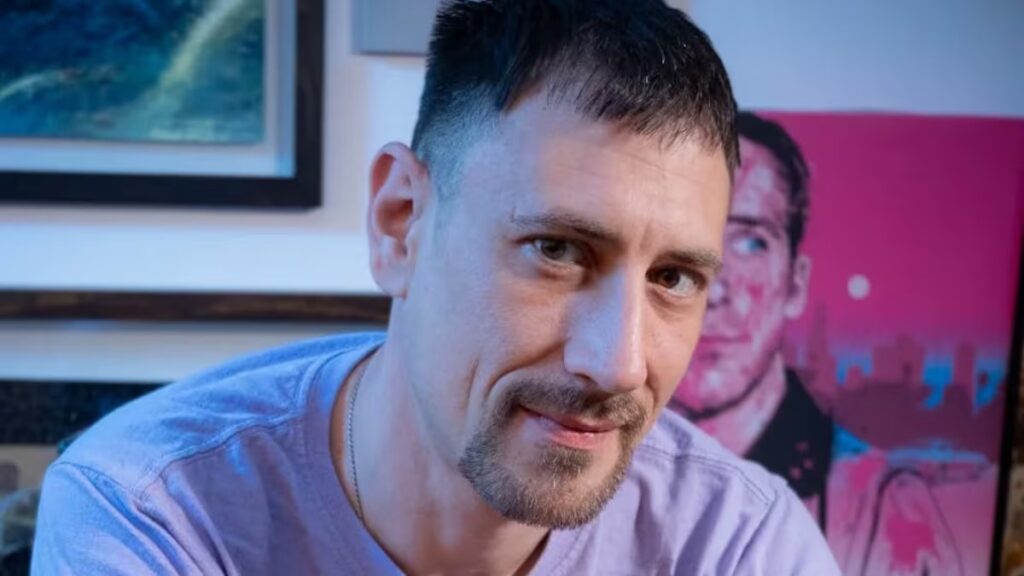
La policía entró a su casa con un ariete, como si persiguieran a un narcotraficante, solo para llevarse discos duros llenos de cine de culto. La fiscalía pide casi un millón de euros de multa y años de cárcel.
Lo que más ruido me hace es el argumento del "lucro indirecto". Como él no cobraba ni un peso —no había publicidad ni suscripciones—, la ley se inventó que su "ganancia" era el prestigio o los seguidores. Bajo esa lógica, cualquier persona que comparta un libro, una canción o una película por puro amor al arte, podría ser tratada como un criminal.
Estamos priorizando el negocio de unos cuantos sobre el derecho de la humanidad a conocer su propia historia cinematográfica.
For those unfamiliar with the story, the digital culture world recently took a hard blow. A Spanish educator known as "El Feo," who ran the channel La Filmoteca Maldita and the site Zoowoman, was taken to court. His crime? Maintaining a repository of films the industry no longer sells — films not on Netflix, Amazon, or anywhere else. Films that were destined to die in oblivion. Police raided his home with a battering ram, as if they were chasing a drug trafficker, taking hard drives full of cult cinema. The prosecution is demanding nearly one million euros in fines and years in prison. What strikes me most is the "indirect profit" argument. Since he charged nothing — no ads, no subscriptions — the law invented that his "gain" was prestige or followers. Under that logic, anyone who shares a book, a song, or a film out of pure love for art could be treated as a criminal.
We are prioritizing the business of a few over humanity's right to know its own cinematic history.
El miedo, la ingenuidad y el nacimiento de Cine Yëk Uk / Fear, Naivety, and the Birth of Cine Yëk Uk
Cuando empecé en esto, no era el "organizador" que ven ahora. Era un ingeniero mecatrónico que regresaba a su estado y veía que algo no cuadraba. Inicié la difusión de eventos y cine con muchísima ingenuidad y un miedo real. No sabía a quién dirigirme, no tenía contactos en el "mundo cultural" de Oaxaca y, sinceramente, sentía que nadie me hacía caso.
En ese entonces, creé @cineyekuk. La lógica era simple: si quiero que la gente venga a ver una película que me cambió la vida, tengo que explicarles por qué es importante. Empecé a reseñar cada filme con la esperanza de que alguien, aunque fuera una sola persona, se animara a asistir.
Con el tiempo, llegó una realidad: en el centro de Oaxaca ya existen espacios que hacen una labor increíble. Hay museos, centros culturales y colectivos que tienen la difusión muy bien armada. Entendí que ese lugar ya estaba lleno. El lugar que estaba vacío era la periferia, lo local, donde el "ruido digital" del turismo no llega.
When I started, I wasn't the "organizer" you see now. I was a mechatronics engineer returning to his home state and sensing something was off. I began promoting events and films with a lot of naivety and real fear. I didn't know who to reach out to, I had no contacts in Oaxaca's "cultural world," and honestly, I felt like no one was listening. That's when I created @cineyekuk. The logic was simple: if I want people to watch a film that changed my life, I have to explain why it matters. I started reviewing every film hoping that at least one person would show up. In time, reality set in: the center of Oaxaca already has incredible spaces doing great work — museums, cultural centers, and collectives with strong outreach. I understood that space was already full. The vacant space was on the periphery, in the local, where the "digital noise" of tourism doesn't reach.
Cine Poo: El Tlacuache en Atzompa / Cine Poo: The Opossum in Atzompa
Ahora vivo en Atzompa, y es aquí donde decidí plantar bandera. Si iba a seguir con esto, tenía que tener un impacto real en mi comunidad inmediata. Así nació Cine Poo.
En mi lengua materna, el Ayuuk (Mixe), Poo significa Tlacuache. Y no es una coincidencia. En nuestras historias antiguas, el tlacuache es el héroe más humilde: fue él quien se robó el fuego de los dioses para dárselo a los hombres. No pidió permiso, se quemó la cola en el proceso, pero trajo la luz.
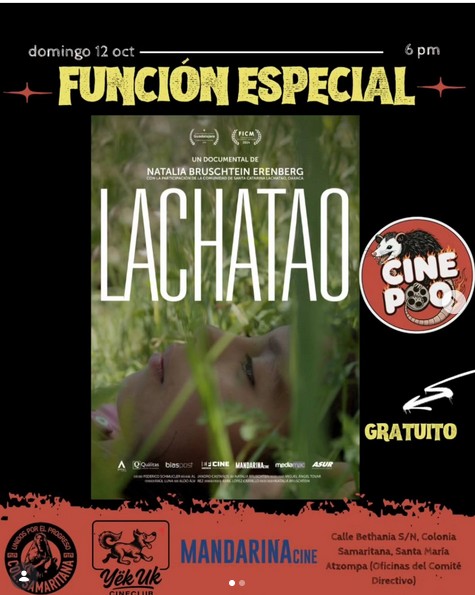
Eso es exactamente lo que intenta hacer Cine Poo con el cine. El acceso a la cultura no debería ser un privilegio de quienes pueden pagar una suscripción de streaming o una entrada de cine comercial que cuesta lo mismo que una comida familiar. Compartir cine, incluso cuando la ley no entiende el contexto, es nuestra forma de "robar el fuego".
I now live in Atzompa, and that is where I decided to plant my flag. If I was going to keep doing this, I needed a real impact on my immediate community. That's how Cine Poo was born. In my mother tongue, Ayuuk (Mixe), Poo means Opossum — and it's no coincidence. In our ancient stories, the opossum is the humblest hero: it was he who stole fire from the gods to give it to humanity. He didn't ask for permission. He scorched his tail in the process — but he brought the light. That is exactly what Cine Poo tries to do with cinema. Access to culture should not be a privilege reserved for those who can afford a streaming subscription or a commercial cinema ticket that costs as much as a family meal. Sharing films — even when the law doesn't understand the context — is our way of "stealing fire."
Pasos de bebé en un mundo abrumador / Baby Steps in an Overwhelming World
Hoy, el proyecto ha crecido. QueOndaOaxaca.com ya no es solo una idea, es una plataforma programada para que la gente encuentre qué hacer sin algoritmos que les vendan cosas. Gracias a ese crecimiento, ya llegan estrenos y películas de gran calidad para proyectar.
Pero aquí es donde la realidad golpea. El problema ahora no es el miedo, sino la falta de tiempo y recursos.
- Solo al mando: No hay un equipo de marketing, no hay diseñadores, no hay financiamiento externo.
- El tiempo es oro: Dividirse entre el trabajo como ingeniero, mantener el sitio web, organizar los intercambios de idiomas de LudiTalk y proyectar cine es una tarea titánica.
- La falta de espacios: No siempre hay un lugar seguro o digno para proyectar, y los recursos técnicos —proyectores, audio— salen del propio bolsillo.
Today, the project has grown. QueOndaOaxaca.com is no longer just an idea — it's a platform built so people can find things to do without algorithms selling them things. Thanks to that growth, quality films and new releases are starting to come through. But here's where reality hits. The problem now isn't fear — it's time and resources.
- Flying solo: No marketing team, no designer, no external funding.
- Time is everything: Splitting time between engineering work, maintaining the website, organizing LudiTalk language exchanges, and screening films is a titanic task.
- Lack of spaces: There isn't always a safe, dignified venue for screenings, and the technical gear — projectors, sound — comes out of pocket.
¿Por qué seguir? / Why Keep Going?
El caso del Feo y la Filmoteca Maldita nos recuerda que si dejamos que la cultura se vuelva exclusivamente un negocio, perderemos nuestra identidad. Si un ingeniero en Oaxaca no usa su conocimiento para crear puentes de acceso, ¿para qué sirve la tecnología entonces?
Dos reglas que guían el proyecto:
- Si puedes pagar, apoya: Compra la obra del artista local, paga tu entrada en los cines independientes. De eso viven los creadores.
- Si no hay acceso, comparte: No permitamos que las "obras huérfanas" o el contenido bloqueado mueran. La cultura que no se comparte, se pudre.
The case of El Feo and La Filmoteca Maldita reminds us: if we let culture become purely a business, we will lose our identity. If an engineer in Oaxaca doesn't use their knowledge to build bridges of access, then what is technology for? Two rules guide this project:
- If you can pay, support: Buy local artists' work. Pay for tickets at independent cinemas. That's how creators survive.
- If there's no access, share: Don't let "orphan works" or blocked content die. Culture that isn't shared, rots.
¿Tú qué piensas? ¿Es delito compartir lo que otros quieren olvidar? Te leemos en los comentarios.
What do you think? Is it a crime to share what others want to forget? We read every comment.
Sigue el proyecto y súmate / Follow the Project and Join Us
- Agenda Cultural / Cultural Agenda: queondaoaxaca.com
- Idiomas y comunidad / Languages & community: @luditalk
- Cine y rescate / Cinema & rescue: @cineyekuk y @cine.poo
- Apoyo independiente / Independent support: ☕ Buy Me a Coffee — Cada café ayuda a mantener los servidores vivos y el cine en la calle. / Every coffee keeps the servers running and the cinema in the streets.